
In large-scale peanut butter production, peanut butter filling machines must be able to fill each jar or cup with consistent and repeatable doses. When filling weights deviate—whether due to overfilling, underfilling, or fluctuations throughout a shift—the impact ripples through the entire production process: product loss, batch scrapping, customer complaints, and, in regulated markets, potential legal risks. For manufacturers relying on a peanut butter machine to maintain throughput and quality, understanding the root causes of filling inaccuracy is not optional. It is a core competency.
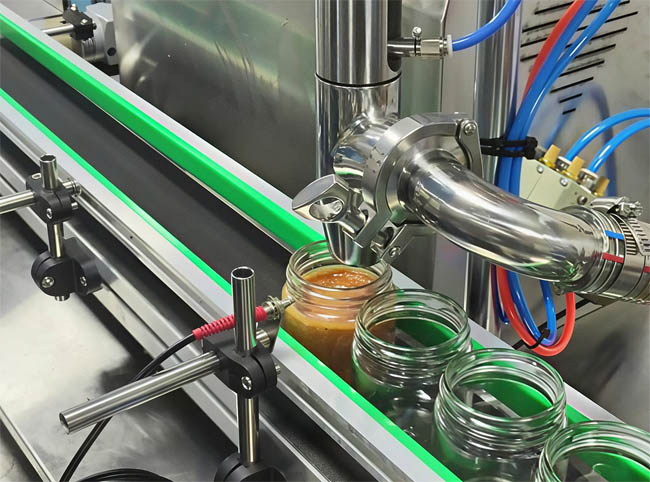
Below, we will explore the technical factors that lead to inconsistent fill volumes, as well as practical countermeasures that production and maintenance teams can implement.
1. Piston Calibration Drift and Mechanical Wear
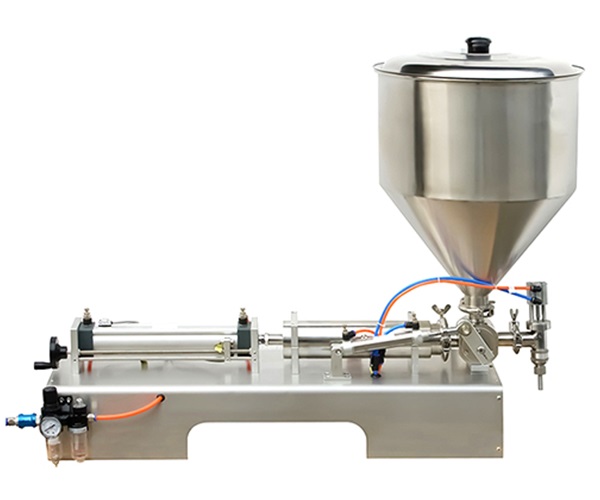
When fill weight deviations occur, the first variable to verify is the calibration status of the peanut butter filling machine. Positive-displacement piston fillers—the industry standard for high-viscosity nut butters—achieve metering by drawing a fixed volume of product into the cylinder and then extruding it through the nozzle. The metered volume depends directly on the piston diameter and stroke length. If the stroke setting drifts or the piston seals wear out after prolonged cycling, the actual output volume will change even if the machine’s setpoint remains unchanged.
Seal wear is a particularly common cause of failure. During the piston filling process, the seal ring rubs against the cylinder wall with every reciprocating stroke. After millions of cycles, this wear can lead to internal leakage and reduced volumetric accuracy. For a peanut butter machine running multiple shifts, seal inspection should be scheduled by cycle count rather than calendar time.
Countermeasures: Recalibrate the piston stroke according to the manufacturer’s specifications, and incorporate the replacement of worn piston seals and O-rings into the preventive maintenance schedule. For production operations requiring tighter tolerances, use servo-driven piston filling machines with closed-loop position feedback, as they offer more stable stroke repeatability than pneumatic or mechanical cam-driven systems.
2. Viscosity Fluctuations and Non-Newtonian Behavior
Peanut butter is a viscoelastic non-Newtonian fluid. Its viscosity is not a constant value; it exhibits shear thinning—meaning viscosity decreases when the product is pumped or agitated—and may also exhibit thixotropy, where viscosity changes over time under sustained stress. This rheological complexity directly affects filling consistency. A batch of product left to stand overnight in a hopper may behave very differently from the same formulation after being pumped for thirty minutes.
Temperature further exacerbates this issue. Peanut butter with a higher temperature flows more freely, while colder product hardens, making uniform filling difficult. Without temperature stabilization measures, a peanut butter filling machine may produce acceptable fills at the start of a shift, but as the product temperature in the hopper rises or falls, filling quality will gradually deviate from the standard.
Countermeasures: Use a jacketed hopper or a temperature-controlled production line to maintain a stable filling temperature. For formulations containing particles, using large-bore rotary valves and nozzles can reduce shear stress on the nut pieces and minimize the risk of partial filling caused by clogging. Adjust the filling speed and nozzle diameter based on the measured viscosity of each batch, rather than relying on a single machine recipe.

3. Container Variation and Conveyor Alignment
The container itself is an often-overlooked variable in filling accuracy. Jars or cups with dimensional inconsistencies—dents, warped rims, or variations in internal volume—cannot hold the expected quantity of product even when the peanut butter filling machine dispenses a correct volume. Misalignment on the conveyor compounds the issue: if a container is not centered beneath the nozzle, product may splash onto the rim or fill asymmetrically, leading to weight discrepancies and seal failures.
For cup-based formats, oil migration onto the sealing flange is a related concern. A film of peanut oil on the rim lowers heat-seal strength and can create leakers that are rejected downstream . A suck-back nozzle that retracts product after each dose helps keep the sealing surface clean.
Countermeasure: Inspect containers upstream of the filler and reject defective units before they reach the fill station. Verify that guide rails and star wheels position each container precisely under the nozzle. Where container specifications change between SKUs, update the machine’s recipe parameters—fill height, nozzle offset, conveyor speed—rather than relying on operator adjustment at changeover.
4. Supply Tank Pressure and Product Feed Stability
Inconsistent product supply to the filler is a frequently underestimated cause of fill variation. Piston fillers depend on a steady, adequate head pressure at the inlet. If the supply tank level drops too low, or if the feed system introduces air into the product stream, the cylinder may not fill completely on the draw stroke, resulting in short fills . Surges and pressure fluctuations in the supply line can similarly disturb the fill cycle.
Countermeasure: Maintain supply tank levels within a defined operating band using level sensors, and verify that the feed system is free of air leaks at connections. For high-viscosity products, ensure the supply line diameter and pump capacity are matched to the filler’s demand rate. Check valves and inlet ports should be inspected for product buildup that restricts flow.
5. Operator Procedure and Changeover Discipline
Even a well-maintained peanut butter filling machine is only as accurate as the procedures surrounding it. Inconsistent startup checks, skipped weight verification after changeovers, and ad-hoc adjustments made without documentation all introduce variability. Human error is particularly likely during SKU transitions, when nozzle sizes, fill volumes, and conveyor settings must change together.
Countermeasure: Establish a standard operating procedure that includes weight verification at defined intervals—typically every 15 to 30 minutes during production—and a documented changeover checklist. Operators should record actual fill weights against target specifications, and any adjustment to machine parameters should be logged with the reason and result. Training should emphasize that calibration is a formal process, not an informal tweak.
Conclusion
Inaccurate filling quantities in a peanut butter filling machine rarely stem from a single catastrophic failure. More often, they emerge from the interaction of mechanical wear, product rheology, container variation, and procedural inconsistency. The manufacturers who achieve the tightest fill tolerances are those who treat calibration, temperature control, and preventive maintenance as ongoing disciplines rather than reactive repairs. By understanding the technical roots of the problem—piston volumetrics, non-Newtonian flow, and feed stability—production teams can move from troubleshooting symptoms to preventing them.