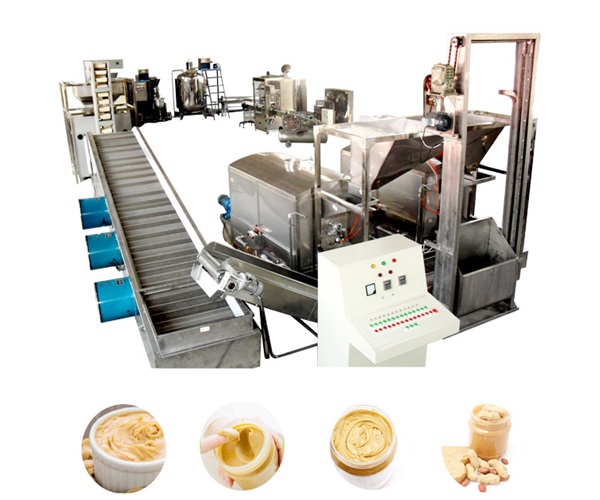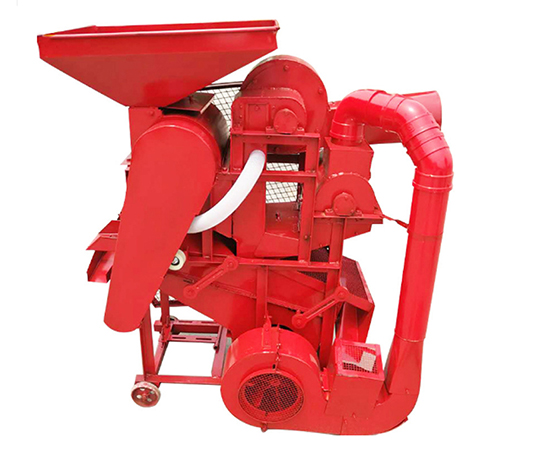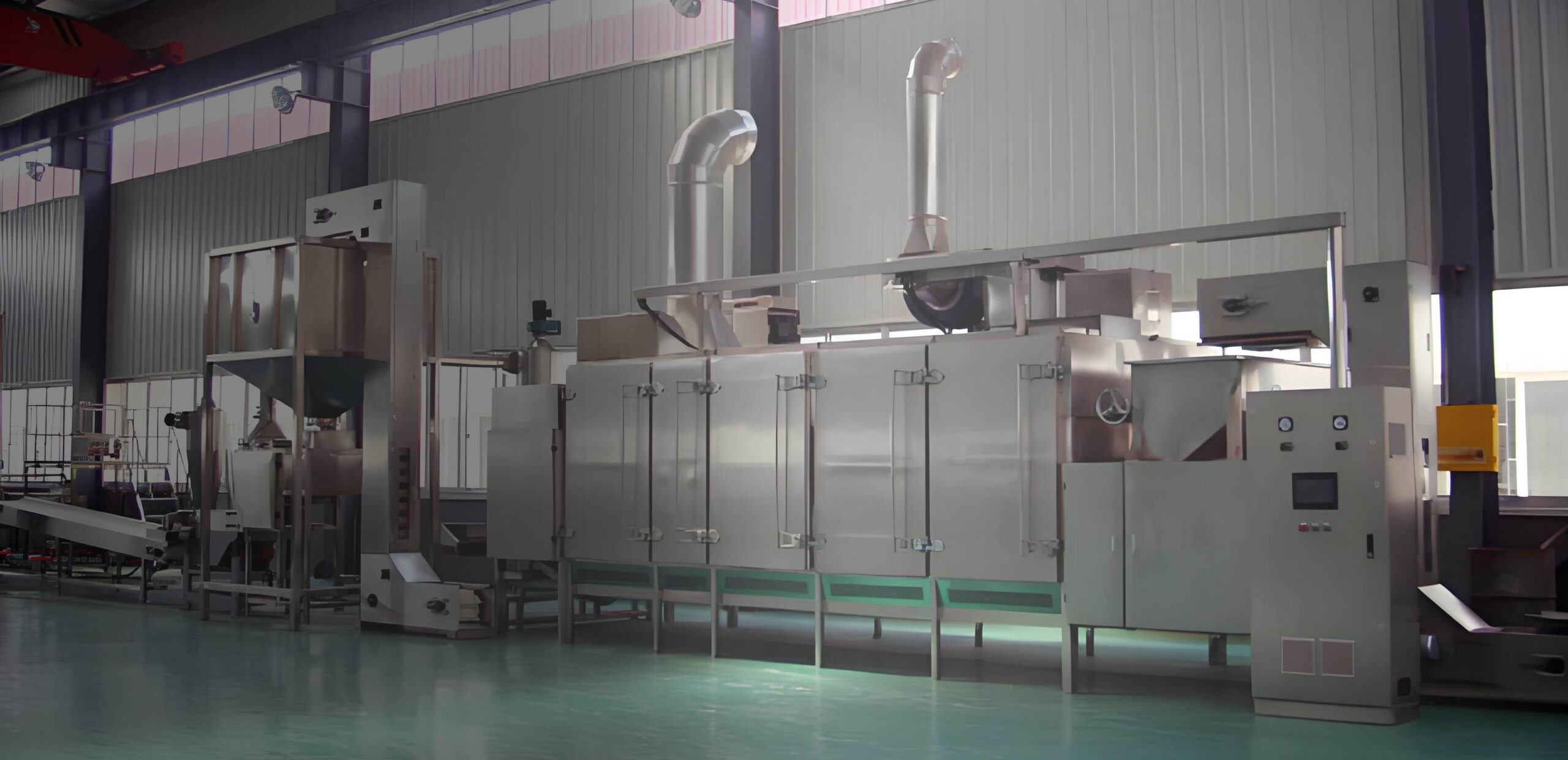

The peanut butter production line integrates a highly mechanized closed-loop system to ensure consistent product quality, minimal contamination, and high operational efficiency. From the receipt of raw peanuts to the final jar filling, every stage relies on specialized peanut butter machines that perform key functions such as shelling, roasting, peeling, grinding, degassing, and aseptic filling. The configuration and performance of this equipment directly impact the product’s texture, shelf life, flavor stability, and the plant’s overall profitability.
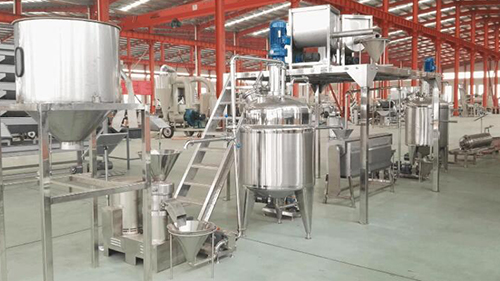
The following is a detailed introduction to the primary machinery in a modern peanut butter processing plant, with a focus on the equipment with the most stringent technical requirements.
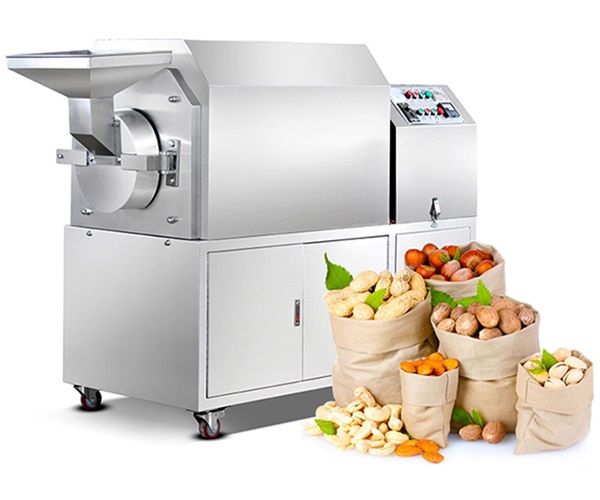
1.Peanut Roasting Machine (Continuous Roaster)
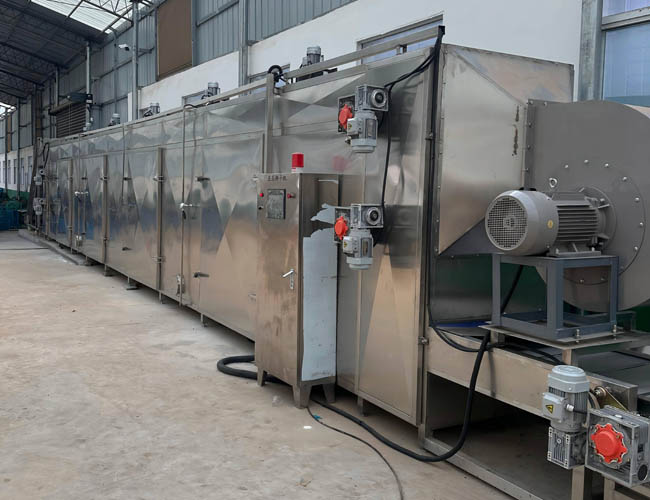
Function: Heat treatment to develop the distinctive nutty flavor of peanuts and reduce moisture content.
Raw peanuts are first fed into the peanut roasting machine via a bucket elevator. The hopper is equipped with a material leveling device to ensure uniform feeding. The peanuts are then evenly distributed on a conveyor belt and fed into the roaster. Precise temperature (typically 160–200°C) and time control ensure uniform roasting, which is critical for achieving consistent color, aroma, and oil release. Proper roasting directly enhances the flowability and final color of peanut butter, thereby improving its sensory appeal and spreadability.
2. Peanut Peeling Machine (Dry Peeler)
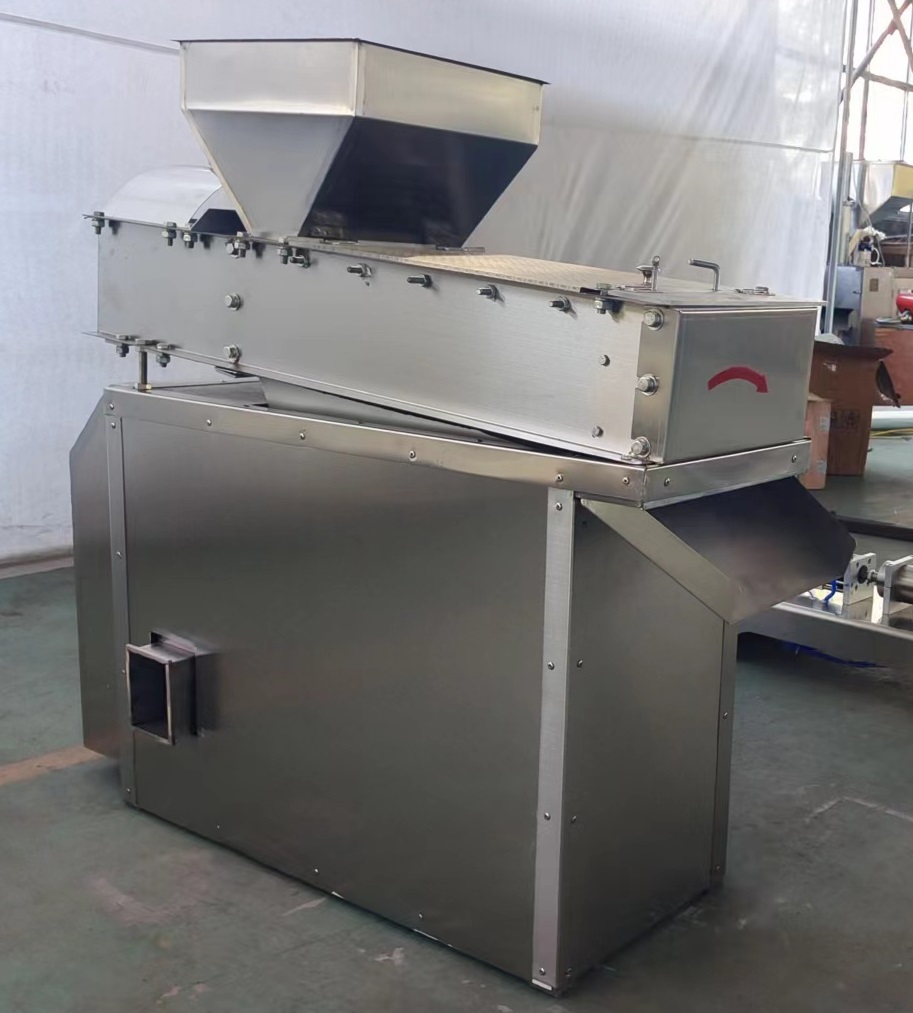
Function: Removes red skins (testa) that contain tannins, which can cause bitterness and darkening.
After roasting and cooling on the cooling belt, the peanuts are elevated into the hopper of the peanut peeling machine. Through vibrating feed, the peanuts enter the peeling rollers in an orderly manner. A mechanical squeezing process completely separates the peanut kernels from the red skins, while an integrated suction system efficiently removes the skins. The peeled peanut kernels are conveyed via an elevator to a sorting conveyor belt—where manual or optical sorting takes place. Color sorters or UV detection systems are used to remove peanuts that are discolored, spoiled, or contaminated with aflatoxins.
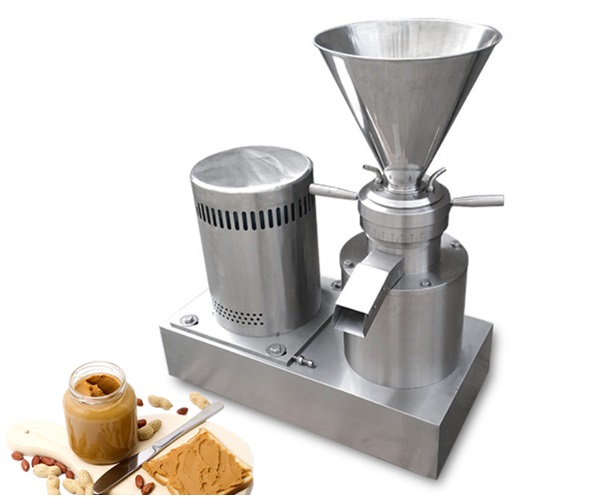
3. Peanut Butter Machine (colloid mill)
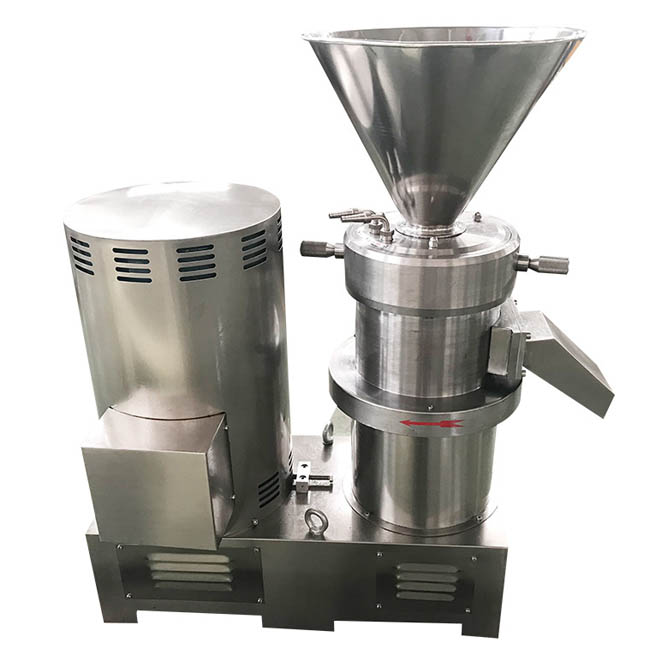
Function: The core peanut butter machine that transforms kernels into a smooth or crunchy paste.
The hulled and inspected peanut kernels are conveyed via an elevator to the hopper of the peanut butter machine. This equipment is typically a colloid mill or stone mill, which uses high-speed rotor-stator motion to shear and grind the peanuts into a fine paste. The grinding fineness is adjustable, allowing for the production of peanut butter with a smooth or chunky texture. This peanut butter machine directly determines the texture and taste of the final product, making it the most critical piece of equipment in the peanut processing production line.
4. Degassing Tank
Function: Freshly ground peanut butter contains air, which accelerates the oxidation of pigments, vitamins, and aromatic compounds. The peanut butter is pumped into a degassing tank, where dissolved oxygen and air bubbles are removed under vacuum conditions.
This vacuum degassing step is crucial for preserving the peanut butter’s color, flavor, and nutritional value, while also extending its shelf life. Additionally, it prevents quality degradation during subsequent storage and packaging.
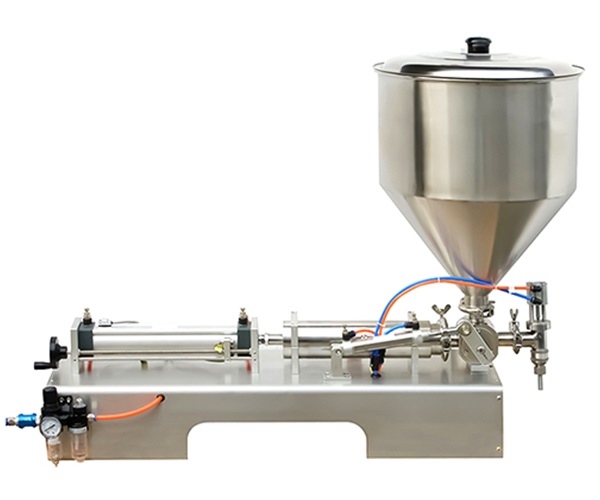
5. Peanut Butter Filling Machine
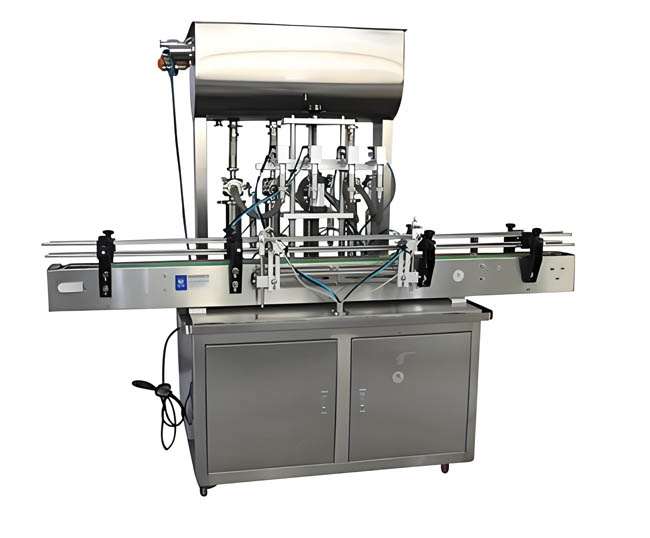
Function: Aseptic, volumetric filling into jars, pouches, or bulk containers.
After degassing, the peanut butter is conveyed to the peanut butter filling machine, where it is filled into jars, pouches, or bulk containers using automatic volumetric or piston-type filling methods. Advanced models are equipped with intelligent speed control, servo-driven precision, and anti-drip nozzles, enabling clean and efficient handling of viscous products. The filling machine ensures consistent net weight, minimizes product loss, and supports high-speed packaging lines.
Supporting Equipment for Peanut Butter Production Lines
In addition to the core equipment mentioned above, the following auxiliary equipment is essential for the smooth operation of the production line:
- Peanut Shelling Machine—Removes peanut shells prior to roasting.
- Bucket Elevator/Conveyor—Facilitates vertical material transfer between processing stages.
- Cooling Conveyor—Rapidly cools roasted peanuts to prevent over-roasting and facilitate shell removal.
- Mixing Tank (Blender)—Blends peanut butter with optional ingredients (sugar, salt, stabilizers, honey) to ensure a uniform texture.
- Condenser—Cools the ground peanut butter, lowering its temperature to maintain product integrity prior to degassing and filling.
- Sorting Conveyor—Manually or automatically sorts out substandard peanut kernels and foreign objects.
Why Choose Our Peanut Butter Equipment?
With over 30 years of specialized experience in peanut processing machinery, we offer complete turnkey peanut butter production lines (capacity: 100–1,000 kg/hour), as well as standalone peanut butter machine suitable for retrofits or pilot-scale operations. Our engineering team provides layout design, installation guidance, and remote troubleshooting services.
Whether you are building a new plant or upgrading an existing production line, we can provide customized solutions. Please feel free to contact our technical sales team. We offer spare parts support, wear parts (grinding discs, belts, rollers), and process optimization services to maximize your return on investment.