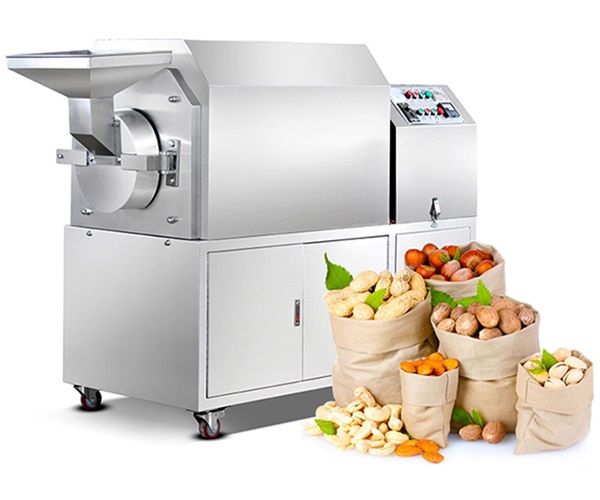

Peanut roaster machines are indispensable equipment in the nut processing industry; however, achieving consistent roasting results requires a thorough understanding of the variables that influence the roasting process. This article will explore the key factors affecting the roasting quality of peanut roasters and provide expert insights to help you optimize your production process.
1. Quality and Design of the Peanut Roaster Machine
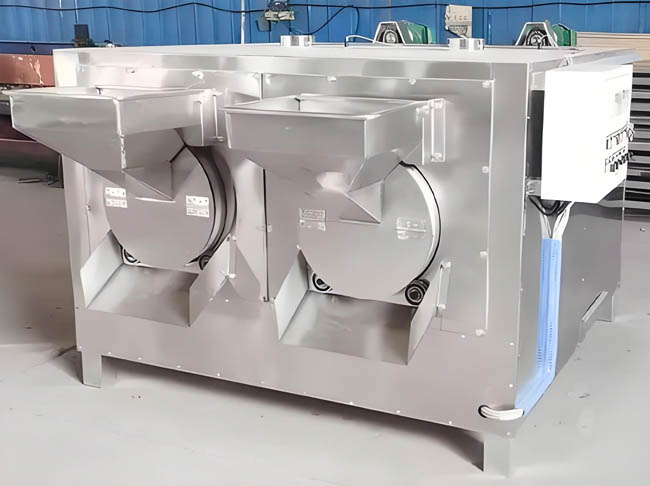
The quality of the peanut roasting equipment itself is the cornerstone of achieving ideal roasting results. A reliable peanut roaster machineequipped with a powerful heat source can generate sufficient thermal energy to rapidly bring the peanuts to the target temperature during the initial roasting phase. This rapid temperature rise is crucial for the Maillard reaction and caramelization—the two reactions that are key to imparting roasted peanuts their distinctive flavor, aroma, and color.
Key technical considerations include:
- Heat source type: Electric, gas, or biomass heating systems, each with different thermal efficiencies and temperature control precision.
- Drum design: The internal drum structure, rotation speed, and material (typically 304 or 316 stainless steel) directly affect the uniformity of heat transfer.
- Temperature control system: A PID (Proportional-Integral-Derivative) controller with an accuracy of ±1°C ensures consistency throughout the roasting process.
- Insulation and heat recovery: Effective insulation reduces heat loss and improves energy efficiency.
- Air circulation system: A well-designed fan and duct system ensures even distribution of hot air within the roasting chamber.
Whether the peanut roaster machine is reasonably designed directly affects the taste, color, and maturity of the roasted peanuts. Investing in a peanut roaster machine from a reputable peanut roaster manufacturer is therefore essential.
2. Characteristics of Peanuts
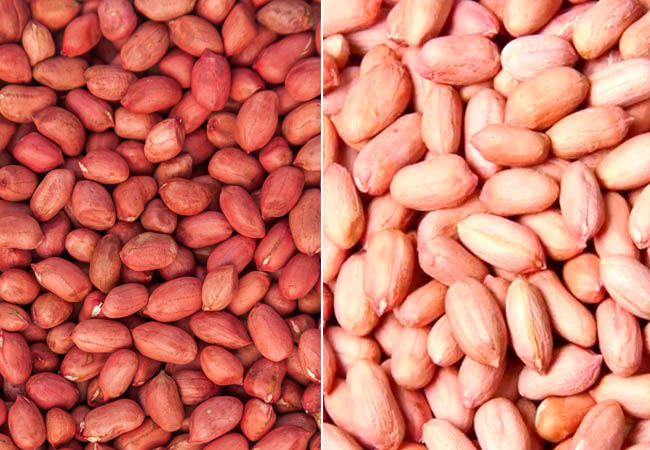
The physical and chemical properties of raw peanuts significantly affect their heat absorption and roasting results. Key factors include:
- Peanut variety: Different varieties (such as Virginia, Runner, Spanish, and Valencia) vary in oil content, sugar content, and protein composition; these differences influence flavor development.
- Density and bulk weight: Peanuts with higher density require more thermal energy to reach the desired internal temperature.
- Moisture content: The moisture content of raw peanuts typically ranges from 5% to 8%. Higher moisture content slows down the roasting process and may lead to uneven heating, while peanuts that are too dry risk burning.
- Shape and size uniformity: Peanuts of uniform size roast more evenly. It is recommended to sort them before roasting.
By accurately measuring the density, moisture content, shape, and size of the peanuts, operators can calculate the energy required for roasting and determine the appropriate batch size through test roasts, thereby ensuring optimal roasting results for the final production batch.
3. Roasting Temperature
Temperature is the primary factor affecting roasting speed and product quality. The optimal roasting temperature for peanuts is typically between 160°C and 200°C (320°F and 392°F), depending on the desired roast level (light, medium, or dark). Therefore, precise temperature control and real-time monitoring are critical for producing high-quality roasted peanuts.
4. Relative Humidity
Relative humidity (RH) is another important factor affecting roasting speed. Higher relative humidity increases the partial pressure of water vapor in the medium, making it difficult for surface moisture to evaporate and thus slowing down the roasting process. Lower relative humidity allows surface moisture to evaporate quickly, thereby accelerating the roasting speed.
However, lower relative humidity is not necessarily better. If humidity is too low, roasting defects such as cracking, a honeycomb-like structure, or uneven texture may occur. Maintaining an optimal relative humidity range (typically 30%–50%) helps ensure uniform roasting and prevents damage to the peanuts’ structure.
Other Factors to Consider
In addition to the key factors mentioned above, the following variables also affect roasting quality:
- Batch size: Overloading the drum impedes airflow, leading to uneven roasting.
- Cooling rate: Rapid cooling after roasting prevents over-roasting and preserves flavor.
- Cleaning and maintenance: Residual oil and debris can affect flavor and hygiene.
- Operator skill: Experienced operators can adjust parameters in real time based on visual, olfactory, and auditory cues.
Conclusion
To roast high-quality peanuts, it is essential to choose a reliable peanut roaster machine from a trusted peanut roaster manufacturer. However, even the best peanut roasting equipment cannot compensate for poor process control. By carefully managing equipment quality, peanut characteristics, temperature, relative humidity, and air circulation speed, you can consistently produce roasted peanuts with excellent flavor, color, texture, and shelf life.
Taking the time to understand these factors and optimize the peanut roasting process will not only enhance product quality but also improve production efficiency and profitability in the highly competitive nut processing market.