
In the peanut processing workflow, peeling is the first and most critical step for obtaining whole peanut kernels, and the peanut peeling machine is the core equipment for this process. Peanut peeling machines can be broadly categorized into two types: dry and wet. Since these two types of equipment have distinct characteristics in terms of structural design, operating principles, and scope of application, it is crucial for processors to understand the differences between them before making a purchasing decision.
1. Dry-Type Peanut Peeling Machine
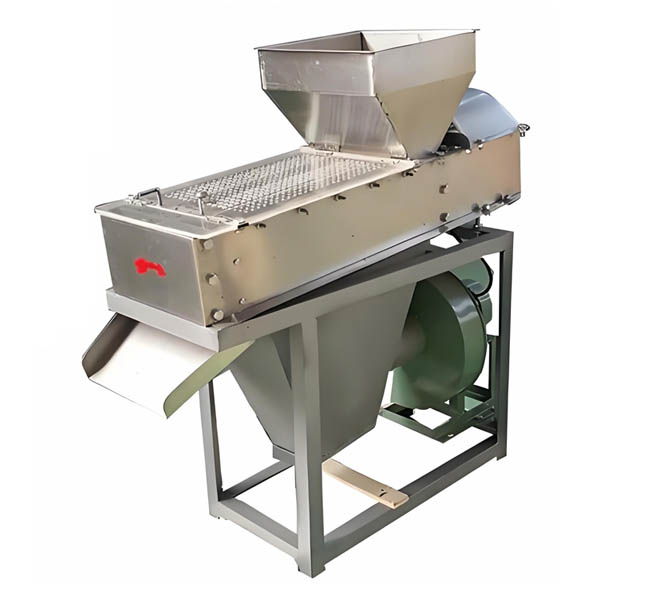
The dry-type peanut peeling machine is mainly composed of a peeling mechanism, a machine frame, and a suction peeling device. This equipment offers numerous advantages, including stable performance, a long service life, excellent peeling results, high production efficiency, and a low rate of broken kernels. Additionally, multiple units can be combined to form larger-scale peanut processing production lines.
Dry peanut peelers operate on the principle of differential rolling friction transmission. When the moisture content of roasted peanuts falls below 5%, they are fed into the machine for peeling. Subsequently, the exhaust system draws away the red skins, thereby achieving efficient separation of whole kernels from half-kernels. This dry peeling process is particularly suitable for the pretreatment stage in peanut food production.
The dry-type peanut peeling machine is the ideal equipment for removing peanut skins, featuring a compact structure and smooth operation. After peanuts are poured into the hopper, they automatically enter the peeling chamber, which consists of two sets of friction rollers; the friction rollers gently remove the peanut skins through friction, resulting in white, intact peanut kernels. This type of hulling machine is widely used in the production of peanut candy, peanut butter, peanut milk, peanut pastries, and other peanut-based food products.
Key technical parameters to consider:
- Peeling rate: typically over 95%
- Half-kernel rate: generally below 5%
- Capacity: ranges from 200 kg/h to 1,000 kg/h depending on model
- Power requirement: usually 1.5–5.5 kW
- Suitable peanut moisture content: ≤5%
2. Wet-Type Peanut Peeling Machine
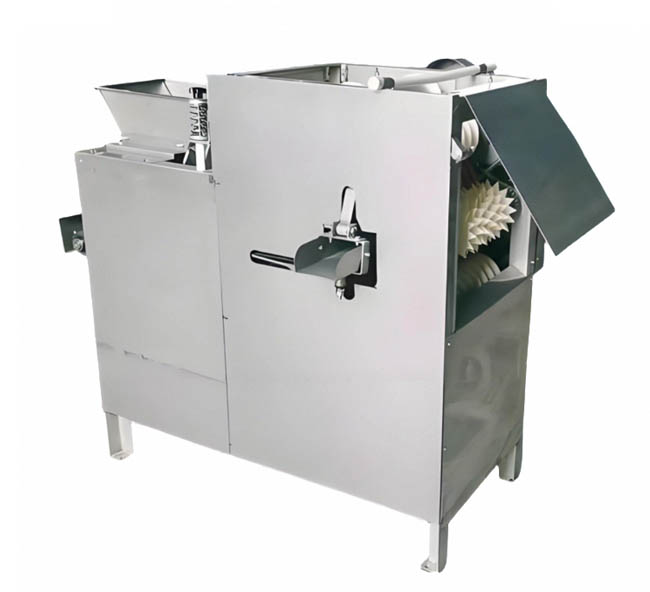
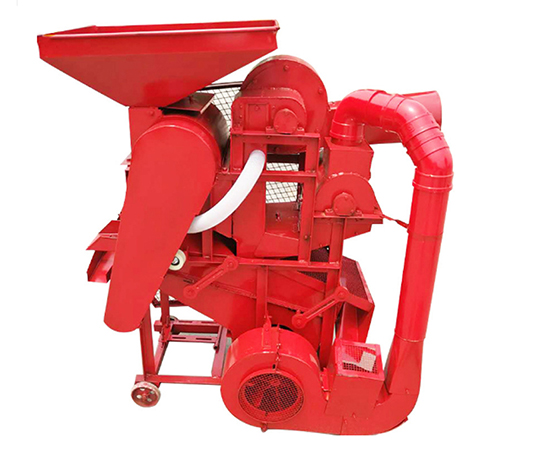
The wet-type peanut peeling machine consists of a power unit (including a motor, pulleys, belts, bearings, etc.), a frame, a feed hopper, peeling rollers (steel or sand rollers), a peeling fan, and other components. The peanut peeling process is achieved through the differential rotation of the rollers and the resulting peeling action. This type of peanut peeler machine can also be used in combination with multiple sets and is suitable for processing peanuts of various specifications. It serves as the early peeling step in processing various peanut products, such as coated peanuts, cocoa peanuts, and milky white peanuts.
When the wet-type peanut peeler machine is in operation, peanuts that have been soaked in cold and hot water are poured into the hopper of the machine. The peanuts then enter the rotating rubber wheel, which is fixed by three power rollers, through vibration. The peeling effect is achieved through the manual twisting wheel under the action of the induction strip and the feeding wheel. Subsequently, the peeled peanuts are pressed into the discharging hopper by the discharging wheel and discharged from the discharging hopper, while the skins are thrown out through the peeling wheel.
The wet-type peanut peeling machine boasts a high peeling rate, and the peeled peanuts remain unbroken, with a white color and unchanged protein content. During the peeling process, the red skins are automatically separated from the kernels. This wet peanut peeling equipment features a small footprint, low energy consumption, and easy operation, giving it a wide range of applications. Additionally, it can be used for wet peeling of almonds and legumes, making it an ideal multi-purpose machine for food processing plants.
Key technical parameters to consider:
- Peeling rate: typically over 98%
- Kernel integrity rate: very high, with minimal breakage
- Capacity: ranges from 150 kg/h to 800 kg/h depending on model
- Power requirement: usually 0.75–3 kW
- Soaking time: generally 3–10 minutes depending on water temperature
3. How to Choose the Right Peanut Peeling Machine
Dry-type and wet-type peanut peeling machines differ significantly in structure, operating principles, and scope of application. When choosing a peanut peeler machine, you need to decide whether to buy a dry-type peanut peeling machine or a wet-type one according to your own specific needs.
Here are several key factors to consider:
- Final Product Requirements: If you produce peanut butter, peanut milk, or peanut candy, a dry peanut peeler is typically the better choice; if you produce coated peanuts, cocoa-coated peanuts, or milk-flavored peanuts, a wet peanut peeler is more suitable.
- Peanut Moisture Content: Dry peelers require roasted peanuts with a moisture content below 5%, while wet peelers require pre-soaked peanuts.
- Production Capacity: Consider your required throughput and select a model that matches your production scale. Both types of equipment support multi-machine configurations to achieve higher output.
- Kernel Integrity: Wet peelers typically produce fewer broken kernels; this is particularly important if you require whole peanut kernels.
- Budget and Operating Costs: Wet peelers generally consume less energy, but in certain applications, dry peelers may offer higher production efficiency.
By carefully evaluating these factors, you can select the most appropriate peanut peeling machine for your peanut processing business, ensuring optimal efficiency, product quality, and return on investment.