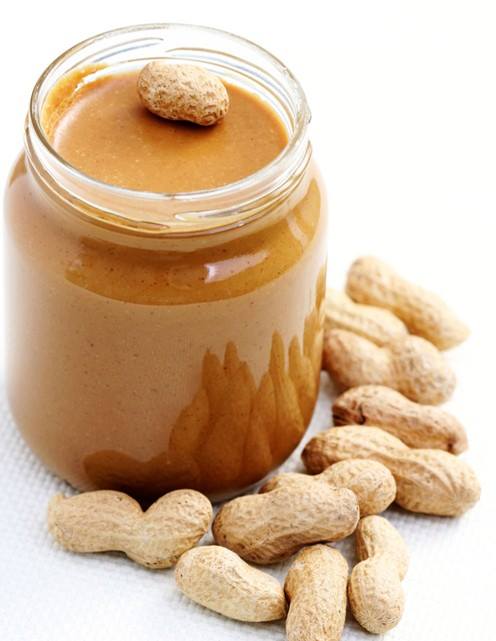
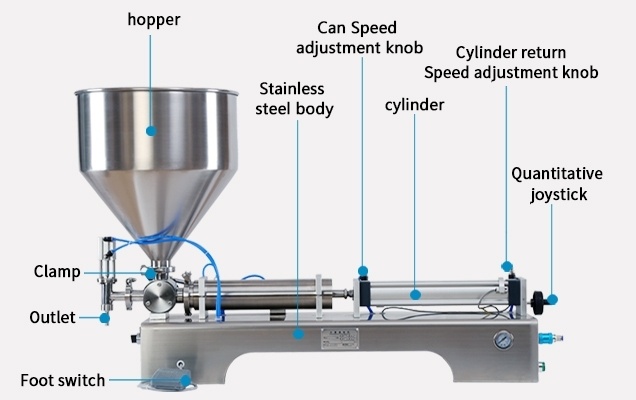
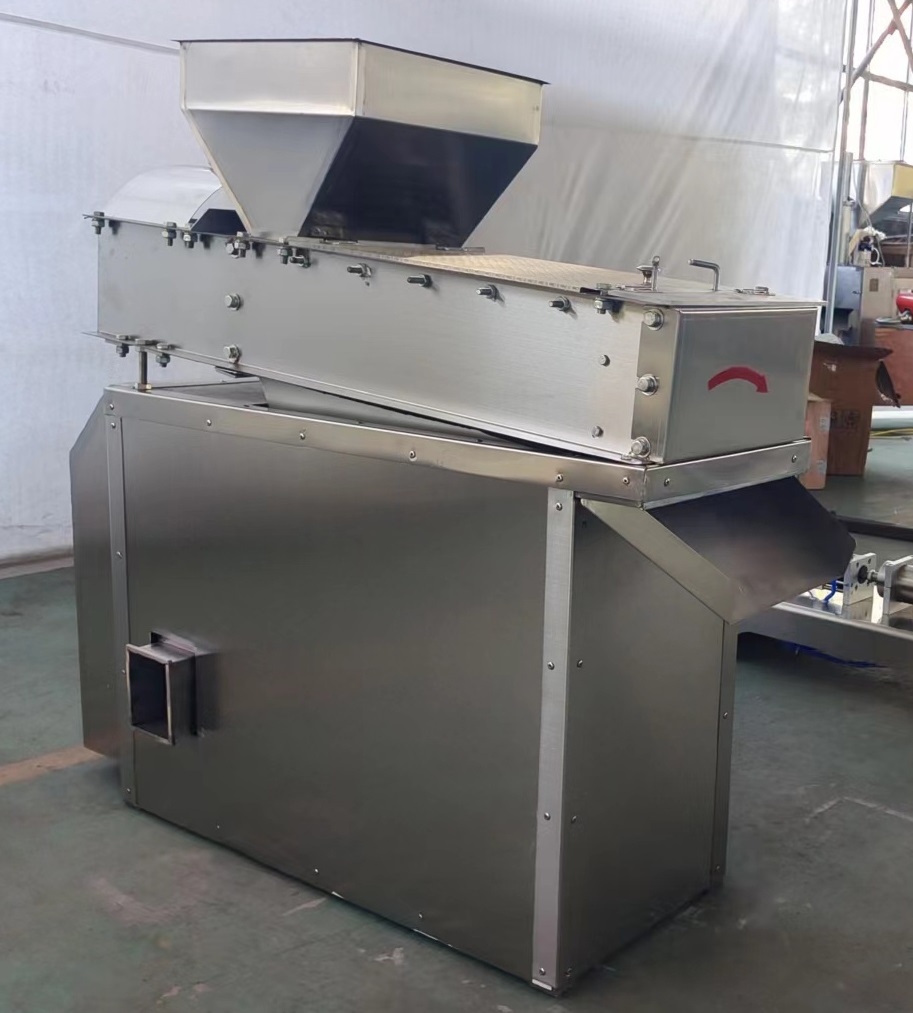
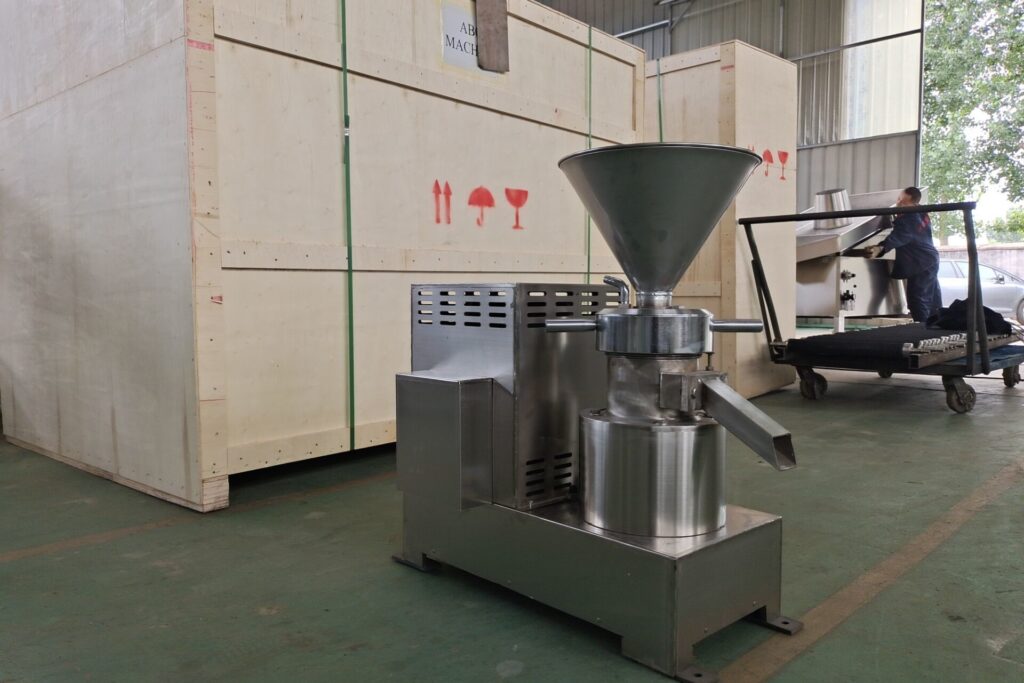
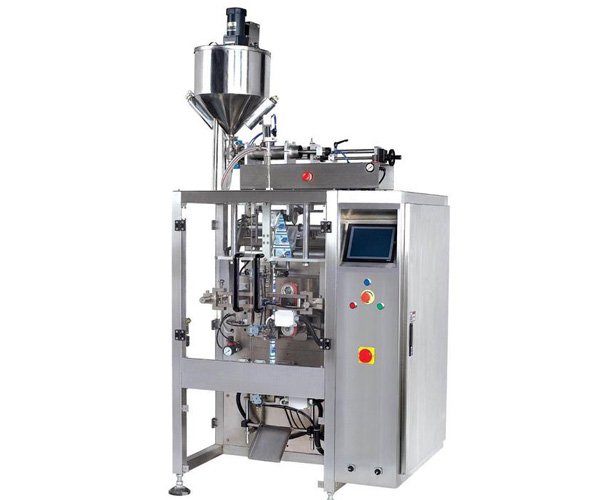
Peanut butter filling machine is mainly used in food (peanut paste, sesame paste, sweet pasta, tomato sauce, butter, etc.), pesticide, medicine, daily chemical, chemical, lubricant and paste filling in special industries.
It is suitable for food, medicine, daily chemical and special industries. It is an ideal equipment for filling high viscosity fluids or paste with proper velocity, such as peanut butter, sesame butter, tahini butter, nut butter, crunchy peanut butter etc.
How to work:
The peanut or nut butter is sucked and pumped through a piston driven a cylinder and its flow direction controlled by a three-way rotating valve. The cylinder stroke is controlled by a single valve and filling amount adjusted by a hand wheel.
Reference Video:
For your reference, please see an introduction video of a small semi-automatic peanut butter plant (including peanut butter filling machine) at YouTube:
Video of a small semi-automatic peanut butter plant
Materials that cannot be filled:
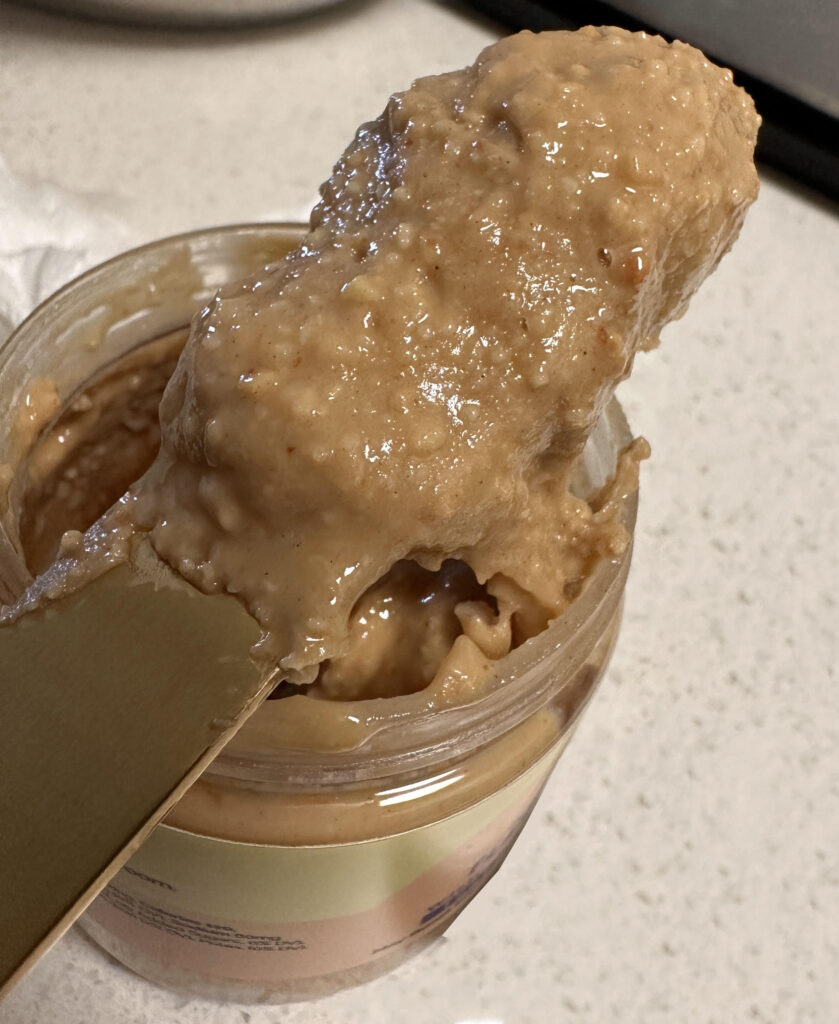
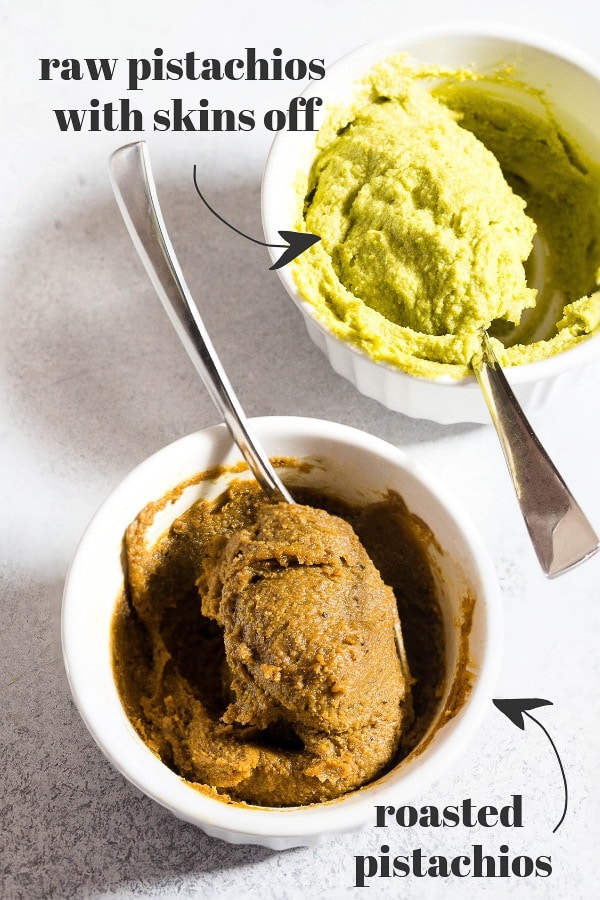
The butter or paste with too high velocity, such as pistachio spreads, crunchy peanut butter for filling into glass jars or PET jar.
Please pay attention to this note before placing order.
Peanut butter is a well-liked spread that is produced by grinding peanuts. The peanut butter market is experiencing growth worldwide, driven by various factors. The increasing demand for peanut butter in emerging markets is also fueling the growth of the global peanut butter market. The peanut butter market had a valuation of USD 5.70 billion in 2021 and is projected to grow at a CAGR of 6.9% from 2022 to 2028 on a global scale.
There are many potential investors in this field, hope to join the peanut butter manufacturing business. Here we hope to present a free peanut butter manufacturing project proposal to the Related Investors, Food Manufacturing Industries, Peanut Raisers Or Peanut Farmer Groups, Agricultural Organizations, Dairy Or Beverages Company.
Below is a Investment Summary for equipment cost by Huanyang Machinery Co., China.
According to the output and investment cost according to different customer’s requirements, it is usually divided into the following types.
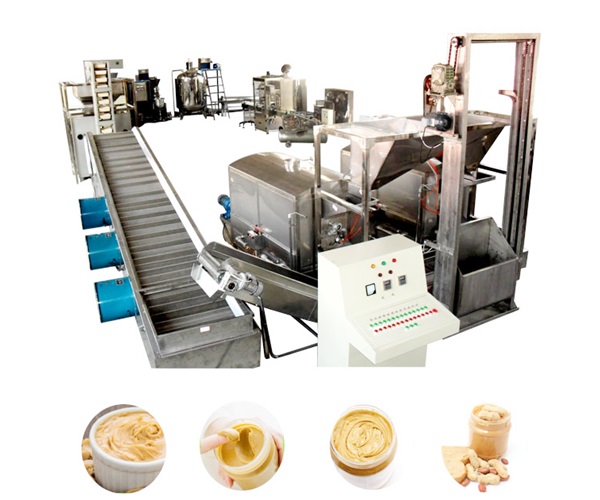
There is a brief introduction of peanut paste processing technology and the related equipment list.
Manual type: For small and new starting of peanut butter production business.
If you need only the entry level machines for small quantities production at the start, we recommend manual type peanut butter plant, which includes only the main machines of complete mini-unit, including Roasting Machine, Peanut Peeling Machine, Peanut Butter Grinder, and/or Peanut filling machines. This semi-automatic design haven’t the connecting conveyors, elevators or storage tanks, these works are don by workers manually.
Usually the recommended capacity for the smallest complete production system is 50KG/Hour to 100KG/Hour.
Automatic type: For commercial use and industrial scale peanut paste production, we recommend an automatic peanut production system.
This system is suitable for the below customers:
Investors for a medium size production line with better budget.
Investors who have relevant experiences in peanut paste production and hope to upgrade current peanut butter factory
Investors who hope to enlarge the production scales.
Peanut related enterprises who hope to enlarge the product range.
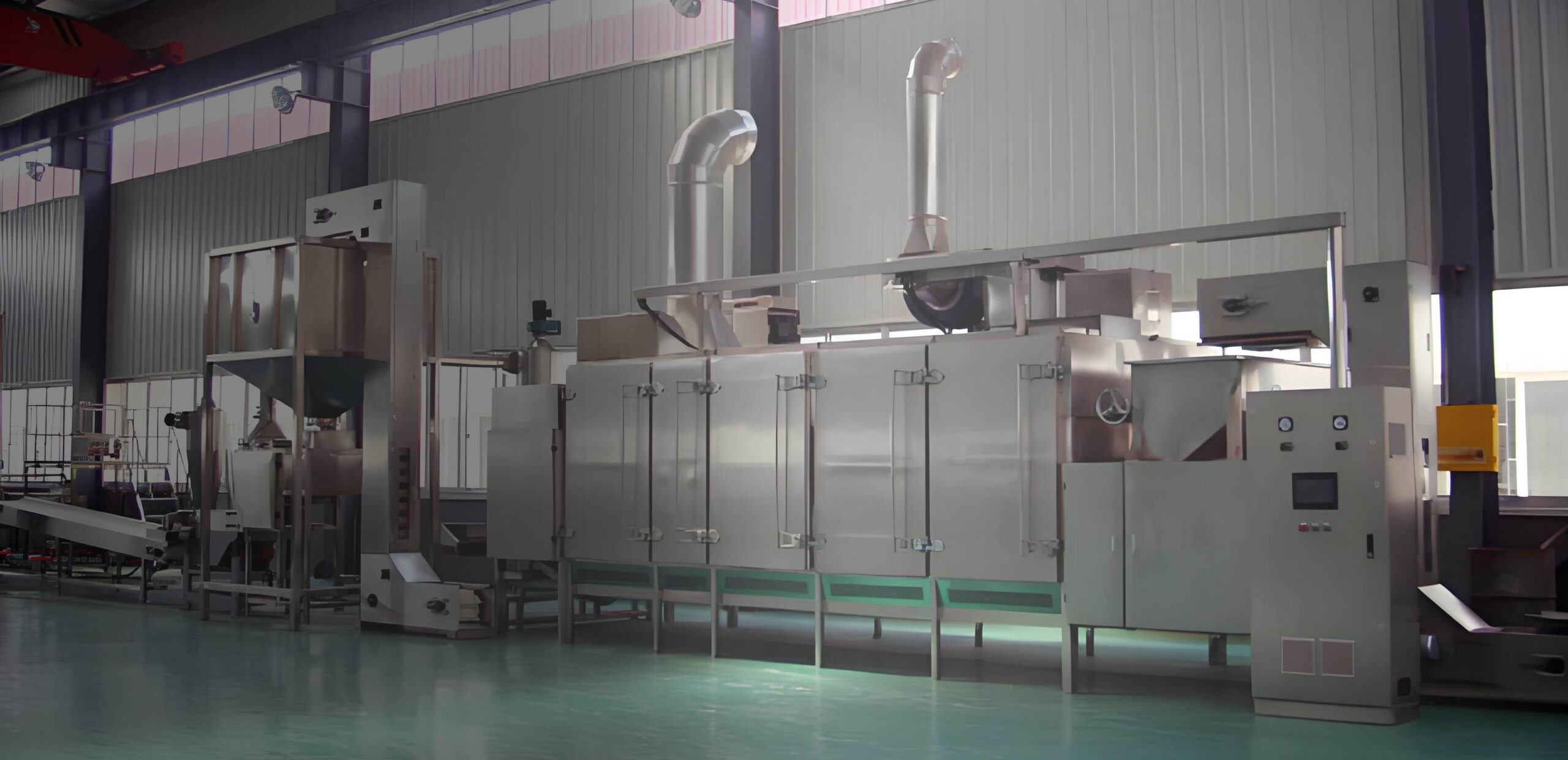
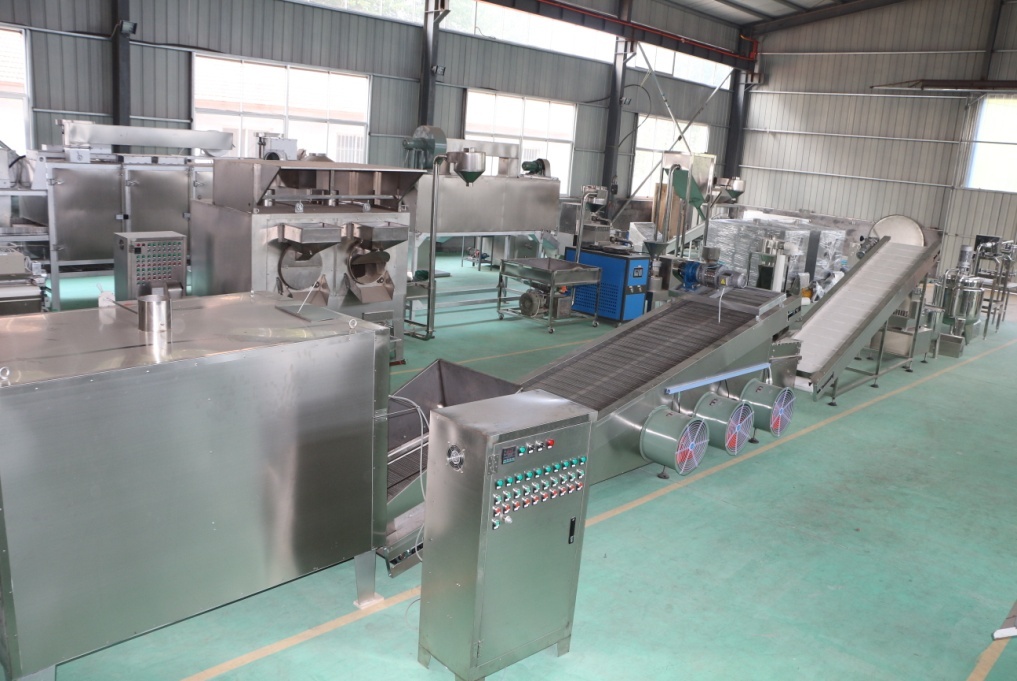
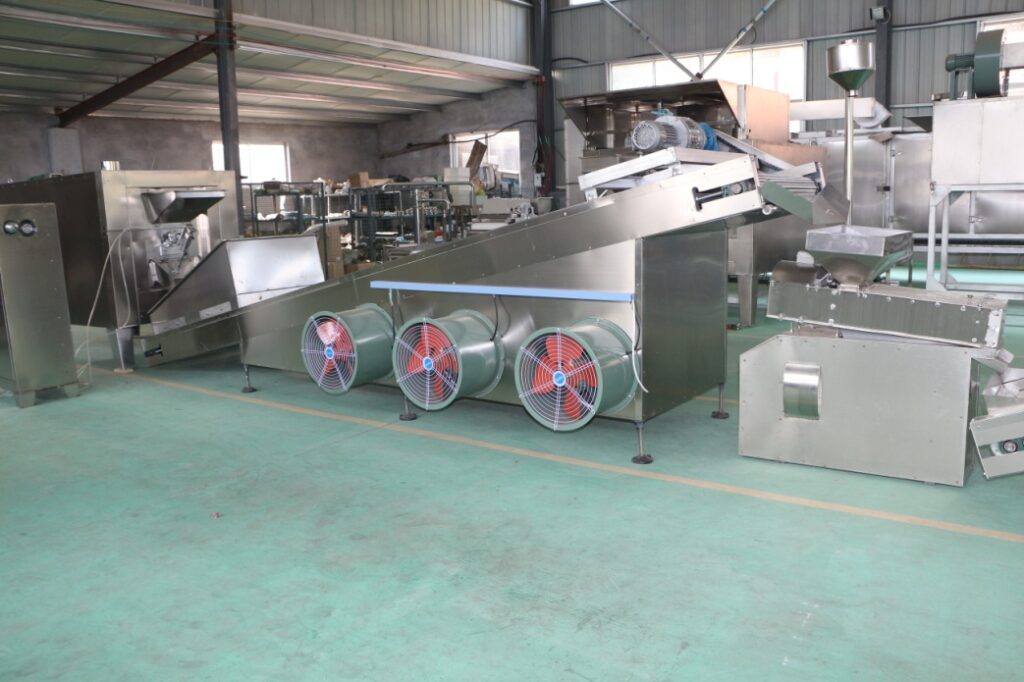
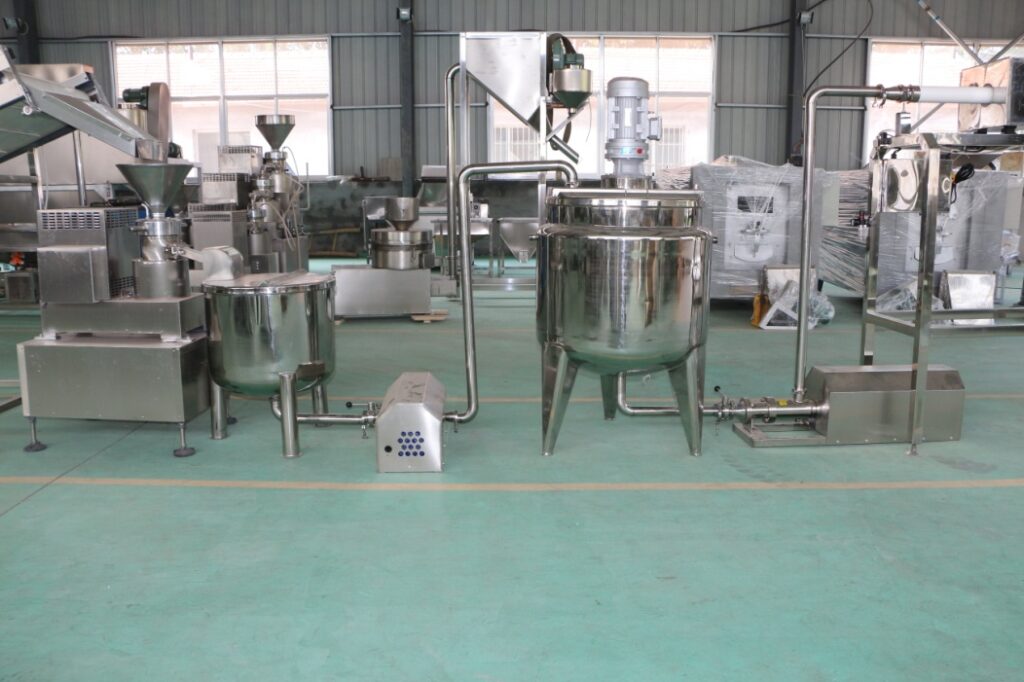
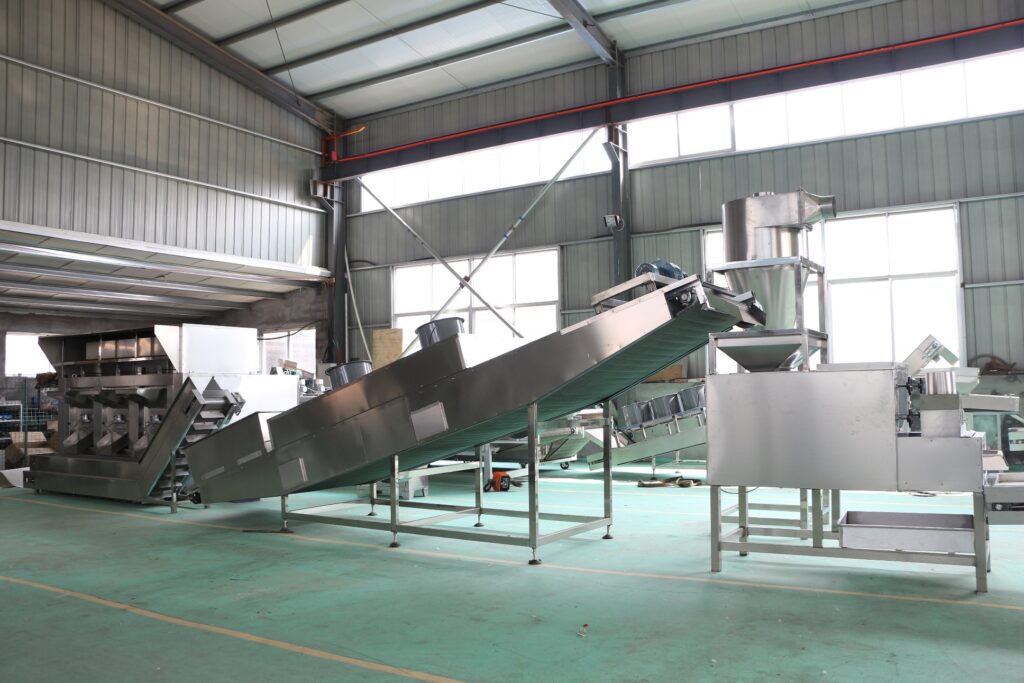
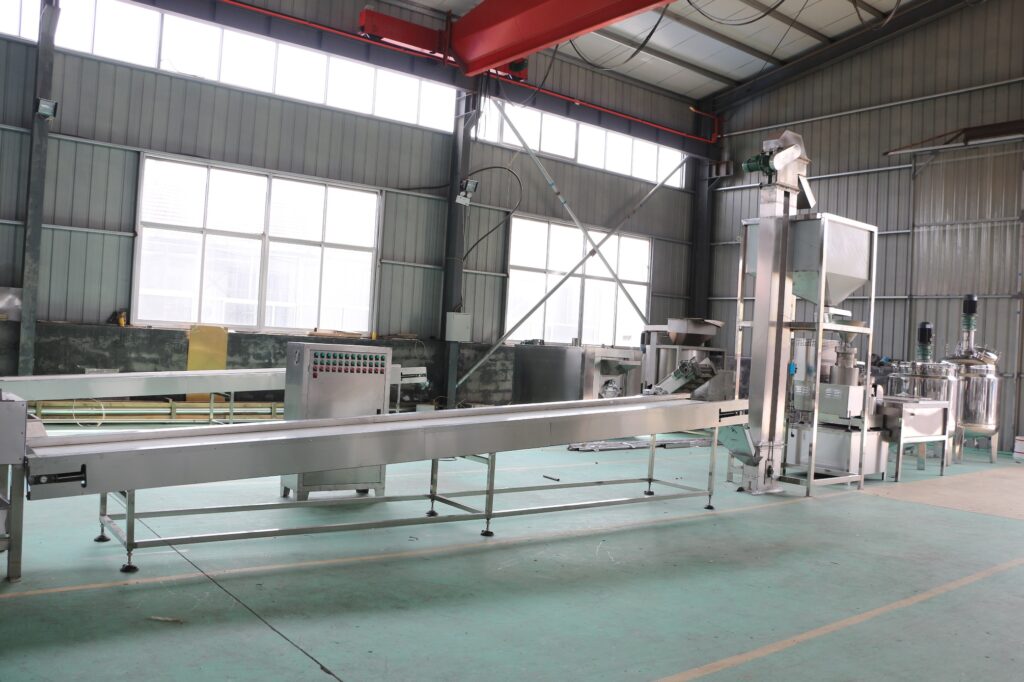
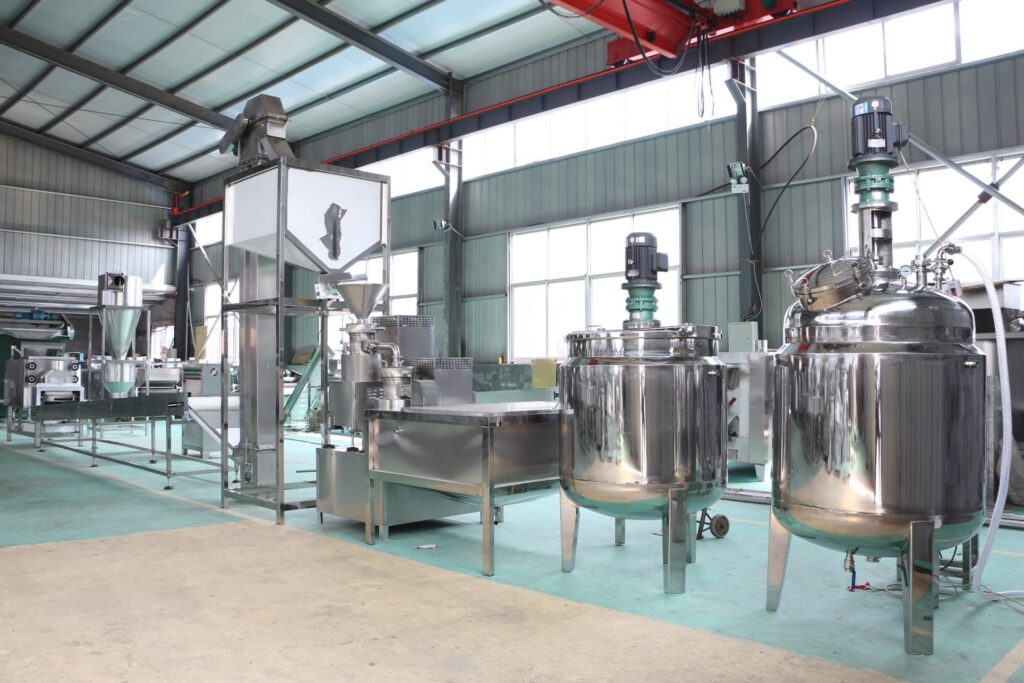
The main equipment in the plant includes Roasting Machine, Belt Conveyor, Cooling Belt Conveyor, Peanut Peeling Machine, Peanut Sorting Conveyor, Feeding Conveyor, Peanut Butter Grinder, Butter Storage Tank, Mixing Tank, Vacuum Tank and Storage Tank.
Usually the recommended capacity for the smallest complete production system is 100KG/Hour to 500KG/Hour.
Now, as you have already a general idea about the types of production plant, we present the following information about a budget price for the approximate investment in the production equipment and machines.
small scale peanut butter production line
No.
Type of plant
Capacity
Description
Processing Flowchart
Approx. Investment
1
Small & Manual line
50KG/H-100KG/H
(1) Feeding & conveying manually by workers (2) Storage tanks prepared by customers
Beside of the above investment in machines, there are other investments such as raw peanut purchase, manufacturing cost, labor costs, marketing and distribution expenses, and other overhead costs.
The above Manufacturing business plan of peanut butter production line is designed and manufactured by the specialized manufacturer and exporter, LianYungang HuanYang Machinery Company, China. The peanut paste producing machines are easy to work and produces high quality peanut butter. Welcome to consult with us to get a free Project investment plan.
Important Operating Procedures for Control of Peanut Butter Processing
1. Raw Peanut Inspection: Sensory inspection is performed on each batch of peanuts, and the surface quality of the peanuts is observed to see if there are mildew, mutation, and oily phenomena. Take the upper, middle, and lower samples of each bag, spread them out if necessary, and check their appearance. Check the species and make a moisture record.
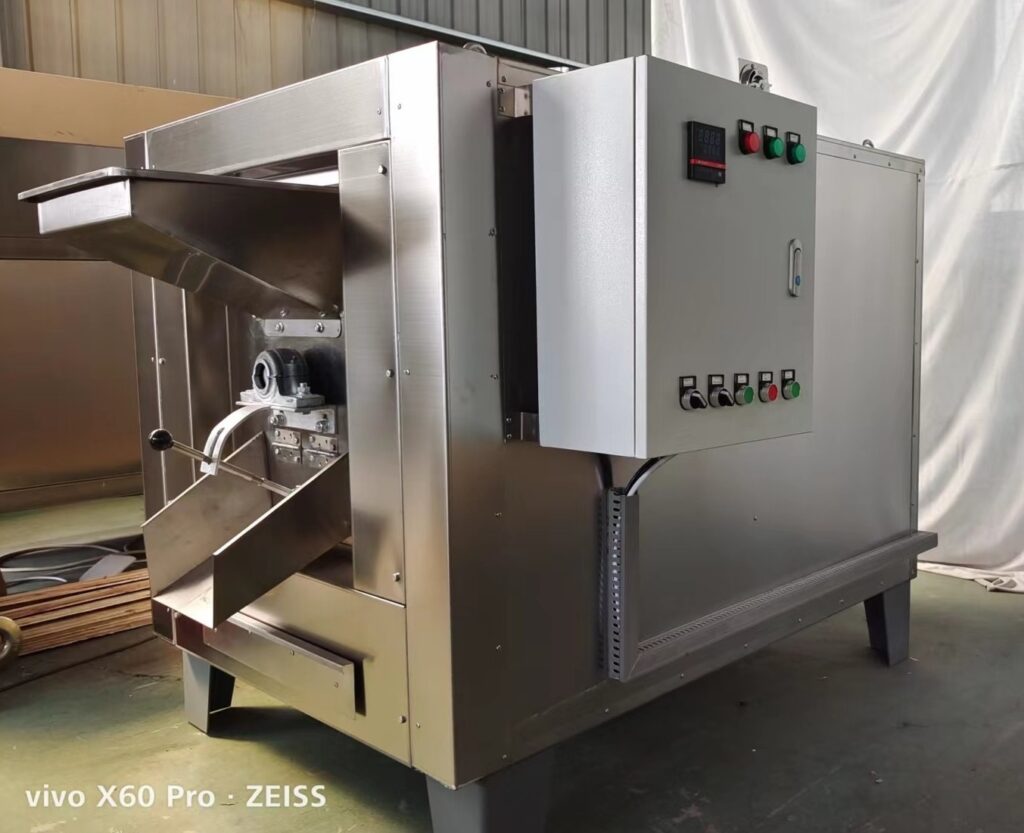
2. Roasting: After preheating the peanut roasting machine for 10 minutes, put the peanuts in, set the temperature to be about 180-185 ℃, and the roasting time is about 20-25 minutes. During the roasting process, pay attention to the operation and peanut maturity. If abnormalities are found, shut down immediately. Sensory inspection of peanuts after roasting is completed, and the next process can be entered only after passing the inspection.
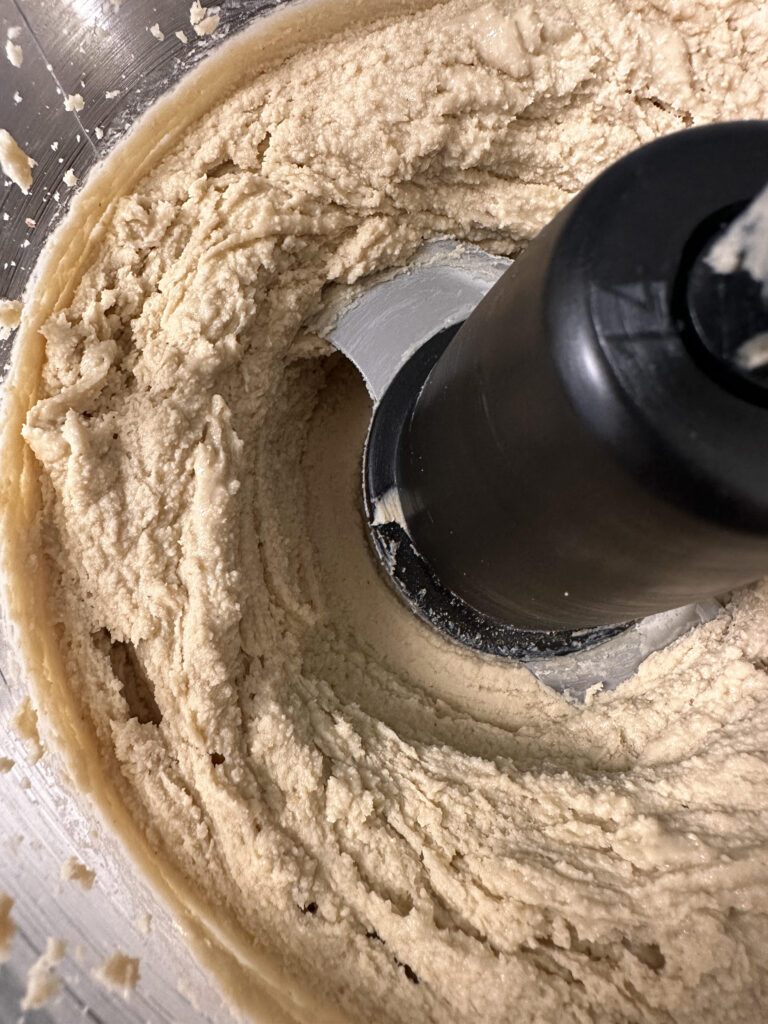
3. Peanut Butting Grinding: Put the peanuts into the peanut butter machine for grinding, perform the first salt grinding and coarse grinding, and grind peanut to a medium fineness of 100 mesh, then add stabilizers and related ingredient, and put them in the mixing tank , Heat the peanut butter to 100-110℃, mix well and sterilize at high temperature. Carry out the second peanut butter grinding and fine grinding, and grind it into 200 mesh fine and smooth creamy finished peanut butter.
4. Metal Detective: After cooling, the peanut butter products are detected every 2 hours to make sure no impurity is mixed in it.
5. Filling and Package: Put the finished peanut butter into the package designated by the customer, quantitatively pack, Put the peanut butter into the package for weighing, and seal with a sealing machine after reaching the specified net content requirement. Disinfect the hands of the operators and the tools and instruments in contact with the product every day. At the end of the day, the packaging workshop should be cleaned up before leaving.